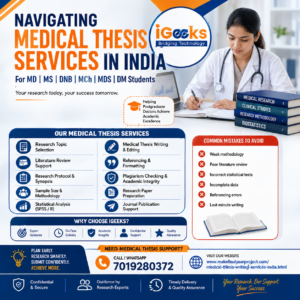


Publishing a research paper is one of the most important academic achievements for students, researchers, and faculty members. Whether pursuing a B.Tech, M.Tech, MBA, PhD, Medical, or Management program, research publication demonstrates subject expertise, analytical ability, and contribution to the academic community.
However, many students face challenges in converting their ideas, project work, or thesis findings into a publication-ready manuscript. Professional research paper writing support can bridge this gap and significantly improve the chances of publication in reputed journals.
Common Challenges Faced by Researchers
Many students possess innovative ideas and valuable research findings but struggle with:
- Identifying a suitable research problem
- Conducting a comprehensive literature review
- Structuring the paper according to journal requirements
- Data analysis and interpretation
- Academic writing and technical documentation
- Citation and reference management
- Journal selection and submission procedures
- Addressing reviewer comments
Without proper guidance, the publication process can become time-consuming and frustrating.
Essential Components of a High-Quality Research Paper
A successful research paper requires much more than simply documenting findings. Every manuscript should include:
1. Strong Research Problem Statement
The research problem must address a real-world challenge or knowledge gap. Journals prefer papers that provide practical solutions, novel methodologies, or significant academic contributions.
2. Comprehensive Literature Review
A literature review demonstrates awareness of existing research and helps establish the significance of the proposed study. It also identifies opportunities for innovation and improvement.
3. Effective Research Methodology
The methodology section explains how the research was conducted. This may involve:
- Surveys and Questionnaires
- Experimental Research
- Case Studies
- Simulation Models
- Machine Learning Algorithms
- Statistical Analysis
- Predictive Models
A well-designed methodology increases the credibility and reliability of research outcomes.
4. Accurate Data Analysis
Data analysis is often the most critical section of a research paper. Researchers must present results using:
- Statistical Techniques
- SPSS Analysis
- Python Programming
- R Programming
- MATLAB Simulations
- Business Intelligence Dashboards
- Data Visualization Tools
Proper analysis helps readers understand the significance of research findings.
5. Results and Discussion
This section explains the implications of the research findings and compares them with previous studies. Clear interpretation of results is essential for journal acceptance.
Importance of Plagiarism-Free Research Writing
Academic journals maintain strict standards regarding originality. Even a technically strong paper can face rejection due to plagiarism concerns.
Professional research support helps ensure:
- Original content development
- Proper paraphrasing
- Accurate citations
- Ethical research practices
- Compliance with journal guidelines
Maintaining low plagiarism levels improves publication prospects and protects academic integrity.
Benefits of Publishing Research Papers
Research publication provides several academic and professional advantages:
Enhanced Academic Profile
Published papers strengthen student portfolios and improve opportunities for higher education admissions.
Career Advancement
Many employers value candidates with research and publication experience, particularly in technical, management, and healthcare domains.
PhD and Higher Education Support
Research publications often strengthen applications for doctoral programs, fellowships, and research grants.
Knowledge Contribution
Published work contributes to the advancement of knowledge and helps solve real-world problems across industries.
Professional Recognition
Authors gain visibility within their academic and professional communities, creating opportunities for collaboration and networking.
Research Paper Support Across Multiple Domains
Professional research assistance can be provided in various disciplines, including:
Computer Science and Information Technology
- Artificial Intelligence
- Machine Learning
- Data Science
- Cyber Security
- Cloud Computing
- Internet of Things
- Software Engineering
Management Studies
- Human Resource Management
- Marketing Management
- Finance
- Operations Management
- Business Analytics
- International Business
Engineering Disciplines
- Mechanical Engineering
- Civil Engineering
- Electrical Engineering
- Electronics and Communication Engineering
- VLSI Design
- Embedded Systems
Healthcare and Medical Research
- Clinical Research
- Public Health
- Hospital Management
- Nursing Research
- Medical Education
Choosing the Right Journal
Journal selection is a critical factor in publication success. Researchers should evaluate:
- Journal Scope
- Impact Factor
- Indexing Status
- Review Timeline
- Publication Ethics
- Acceptance Rate
Popular publication platforms include:
- Scopus Indexed Journals
- Web of Science Journals
- IEEE Publications
- Springer Journals
- Elsevier Journals
- UGC Care Journals
- International Conferences
Selecting the right journal ensures that the research reaches the appropriate audience.
Tips for First-Time Authors
If you are preparing your first research paper, consider the following recommendations:
- Start with a clearly defined research objective.
- Maintain detailed records of data collection and analysis.
- Follow journal formatting guidelines carefully.
- Use recent and credible references.
- Proofread thoroughly before submission.
- Obtain plagiarism verification before final submission.
- Seek expert review and feedback.
These practices can significantly improve manuscript quality and publication outcomes.
Why Academic Guidance Matters
The research publication process involves technical writing, data interpretation, formatting, and journal compliance. Expert guidance helps researchers avoid common mistakes, improve manuscript quality, and navigate the submission process efficiently.
With structured support, students and scholars can focus on innovation and knowledge creation while ensuring their work meets international publication standards.
Final Thoughts
Research publication is no longer limited to PhD scholars and faculty members. Today, undergraduate students, postgraduate students, MBA candidates, and working professionals are actively contributing to academic literature.
A well-prepared research paper not only enhances academic credentials but also opens doors to higher education, career growth, professional recognition, and future research opportunities. By following a systematic approach and seeking expert guidance when required, researchers can successfully transform their ideas into impactful publications.