

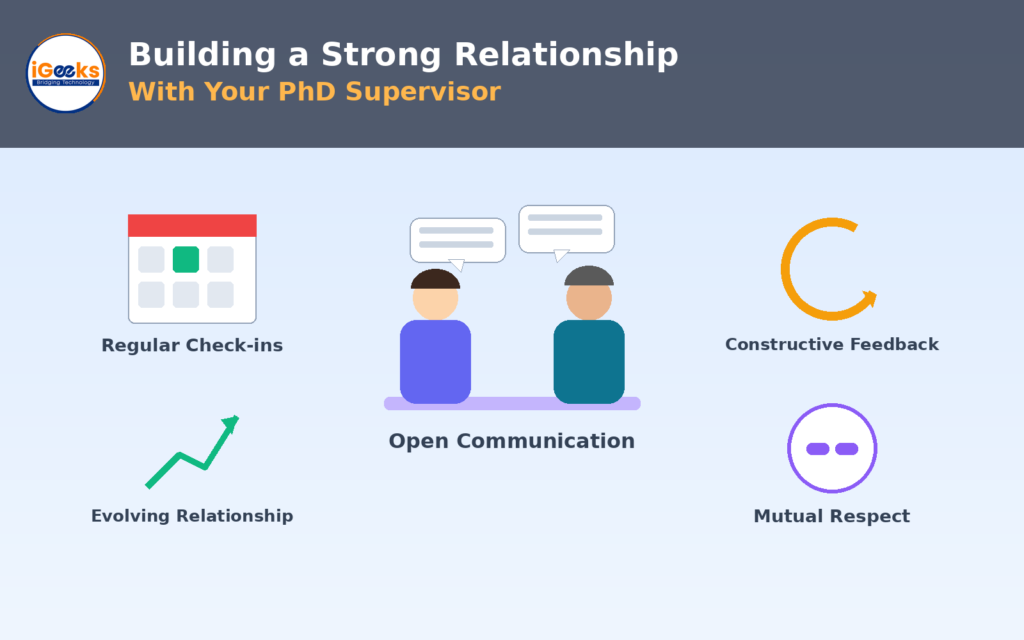
Few relationships influence a PhD journey as much as the one between a scholar and their supervisor. A strong, well-managed supervisory relationship can make research progress smoother, feedback more useful, and difficult stretches more bearable. A strained one, on the other hand, is one of the most common reasons scholars report frustration, delays, or even consider leaving their programs. The good news: this relationship isn’t something that just happens to you — it’s something you can actively shape.
Here’s a practical guide to building — and maintaining — a strong relationship with your PhD supervisor.
Understanding What Supervisors Are (and Aren’t) Responsible For
Many early frustrations come from mismatched expectations. Supervisors are generally responsible for:
- Providing academic guidance on research direction and methodology
- Reviewing and giving feedback on your written work
- Helping you navigate departmental and university requirements
- Supporting your development as an independent researcher
Supervisors are not typically responsible for:
- Managing your day-to-day schedule or motivation
- Writing or substantially editing your thesis for you
- Being available on-demand outside agreed communication windows
Recognizing this distinction early helps set realistic expectations on both sides, reducing frustration when a supervisor’s involvement looks different from what you initially imagined.
1. Set Clear Expectations Early
One of the most valuable conversations you can have — ideally in your first few meetings — is an explicit discussion about how you’ll work together. Useful questions to raise include:
- How often will we meet, and how should I prepare for these meetings?
- What’s a reasonable turnaround time for feedback on written drafts?
- Do you prefer email updates between meetings, or should I wait until our next session?
- How involved would you like to be in shaping my research direction versus letting me lead it?
Having this conversation explicitly — rather than assuming — prevents many common sources of friction later.
2. Come Prepared to Every Meeting
Supervisors often have multiple scholars, teaching duties, and their own research to manage. Making the most of limited meeting time signals both respect and professionalism. Before each meeting:
- Send a brief agenda or summary of what you’d like to discuss
- Come with specific questions rather than open-ended updates
- Share written work in advance whenever possible, so meeting time can focus on discussion rather than initial reading
Scholars who consistently arrive prepared tend to get more focused, useful feedback over time.
3. Communicate Proactively, Not Just Reactively
Waiting until problems become serious before raising them often makes issues harder to resolve. Instead:
- Flag concerns or roadblocks early, even if you don’t yet have a solution
- Share progress updates regularly, even during quieter research phases (data collection, extended reading periods)
- If you’re falling behind on an agreed timeline, communicate this proactively rather than avoiding the topic
Supervisors generally respond far better to early, honest communication than to silence followed by a missed deadline.
4. Learn to Receive (and Act On) Feedback Constructively
Critical feedback on your work can feel personal, especially on writing you’ve invested significant time in. A few mindset shifts help:
- Feedback on your work is not feedback on your worth as a researcher
- Ask clarifying questions if feedback feels vague, rather than guessing at what’s meant
- When you disagree with feedback, explain your reasoning respectfully rather than either silently complying or dismissing it outright
Supervisors tend to invest more energy in scholars who visibly engage with and act on their feedback, rather than those who seem to ignore or resist it repeatedly.
5. Respect Boundaries — Both Yours and Theirs
A healthy supervisory relationship includes mutual respect for reasonable boundaries:
- Avoid contacting your supervisor with non-urgent requests outside agreed communication windows
- If you need faster feedback than usual due to a deadline, ask explicitly and give as much notice as possible
- Equally, don’t hesitate to voice it if response times are consistently too slow to keep your research moving — this is a fair and reasonable conversation to have
6. Address Problems Directly and Early
If the relationship feels consistently difficult — unclear feedback, unavailability, or mismatched expectations — addressing it early is almost always better than letting frustration build silently. Consider:
- Having a direct, calm conversation about specific concerns, framed around solutions rather than blame
- Requesting a joint meeting with a co-supervisor or department head if the relationship remains strained after direct conversation
- Reviewing your university’s formal processes for supervisory concerns or changes, which most institutions have in place for exactly this situation
Most supervisors want their scholars to succeed — many relationship issues stem from miscommunication rather than genuine incompatibility, and can be resolved once surfaced directly.
7. Recognize That the Relationship Evolves
The dynamic with your supervisor in year one often looks different from year three or four. Early on, supervisors are often more directive; as you develop expertise, the relationship frequently shifts toward greater independence and peer-like collaboration. Recognizing this natural evolution — rather than expecting the same dynamic throughout — helps you adapt your expectations and communication style as your PhD progresses.
A Quick Self-Check for a Healthy Supervisory Relationship
- Have we explicitly discussed communication frequency and expectations?
- Do I come prepared to meetings with specific questions or updates?
- Am I communicating proactively about progress and roadblocks, not just when problems become serious?
- Do I engage constructively with feedback, even when it’s difficult to hear?
- If issues have arisen, have I addressed them directly rather than letting them build silently?
Support That Complements Your Supervisory Relationship
A strong supervisor relationship is invaluable, but it doesn’t have to be your only source of support. Additional guidance on writing, data analysis, or thesis structuring can complement your supervisor’s academic direction, especially during particularly demanding phases of your research.
Explore our PhD Thesis Help services in Bangalore: 👉 www.makefinalyearproject.com/phd-thesis-help-bangalore.aspx
Have a question? Reach out directly on WhatsApp: 📲 +91 70192 80372
A strong supervisory relationship, combined with the right support system, can make all the difference in your PhD journey.