

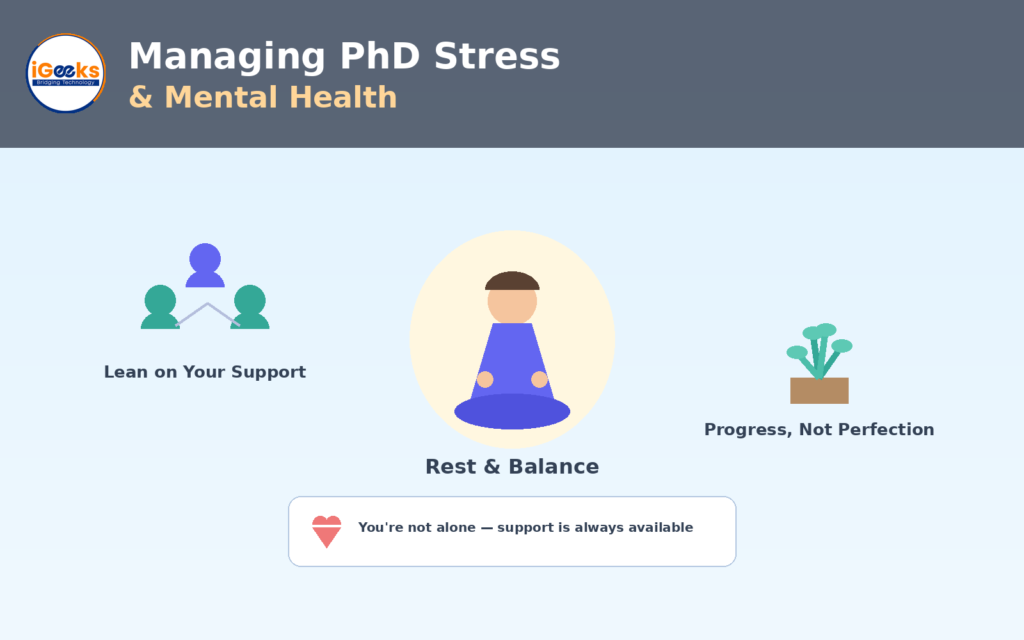
A PhD is one of the most intellectually demanding journeys a person can take on, and the toll it can take on mental health is well documented — not because scholars are somehow less resilient, but because the structure of doctoral research (isolation, open-ended timelines, high stakes, and years of sustained effort) creates real and sustained pressure. Talking openly about this isn’t a sign of weakness; it’s a practical part of managing a PhD well.
Here’s a grounded look at why PhD stress is so common, and practical ways to protect your mental health throughout the journey.
Why PhD Research Is Particularly Demanding on Mental Health
Several factors make doctoral research distinct from other high-pressure pursuits:
- Prolonged uncertainty — research doesn’t follow a fixed script; setbacks, failed experiments, and shifting directions are part of the process
- Isolation — much of the work happens alone, without the built-in social structure of coursework or a typical workplace
- Identity entanglement — for many scholars, research becomes closely tied to self-worth, making setbacks feel more personal
- Delayed validation — unlike a job with regular feedback, PhD progress often goes unacknowledged for long stretches
- Financial and career pressure — funding uncertainty and unclear post-PhD career paths add ongoing background stress
Recognizing these structural factors helps reframe difficult periods as a common feature of the process, not a personal failing.
Recognizing the Signs Worth Paying Attention To
It’s worth being honest with yourself about patterns that may need attention, such as:
- Persistent difficulty concentrating or sleeping, beyond a few rough weeks
- Losing interest in research or activities you previously enjoyed
- Ongoing feelings of hopelessness, dread, or being trapped
- Withdrawing significantly from supervisors, peers, or friends
- Using substances or unhealthy coping mechanisms to get through each day
Noticing these patterns is not a diagnosis — but it is a signal worth taking seriously, and one that’s worth discussing with a professional rather than waiting for things to resolve on their own.
Practical Strategies for Managing Everyday PhD Stress
1. Build Structure Into an Unstructured Process
Without externally imposed deadlines, PhD stress often comes from feeling like nothing has a clear endpoint. Creating your own structure — weekly goals, defined work blocks, visible milestones — can meaningfully reduce this background anxiety (see our guide on PhD time management for a full framework).
2. Normalize Setbacks as Part of the Process
Failed experiments, rejected papers, and discarded chapters are a standard part of research, not evidence that something has gone wrong with your ability. Talking to senior scholars or your supervisor about their own setbacks often helps recalibrate expectations.
3. Protect Social Connection Deliberately
Isolation compounds stress. Regularly connecting with peers — even informally, through a shared workspace, online research community, or occasional coffee catch-ups — helps counteract the solitary nature of research work.
4. Separate Your Identity From Your Output
It’s natural for research to feel personal, but consistently tying your self-worth to daily productivity or specific results tends to intensify stress. Developing interests, relationships, and sources of meaning outside your PhD supports a more resilient sense of identity.
5. Use Your Institution’s Support Resources
Most universities offer confidential counseling services, wellness workshops, or peer support groups specifically for research students. These resources exist because PhD-related stress is common and anticipated — using them is a practical step, not an exception.
6. Build in Genuine Rest, Not Just Breaks
Scrolling a phone between paragraphs isn’t the same as rest. Protecting time for activities that genuinely restore you — exercise, hobbies, time outdoors, time with people who aren’t part of your academic world — supports sustainable long-term output far more than constant, low-grade work.
7. Communicate Struggles Early, Not Just at Crisis Point
Supervisors and departments generally respond far better to early, honest conversations about struggling with a specific challenge than to a scholar who disappears or misses deadlines without explanation. Most universities have processes for extensions, leave, or adjusted timelines when genuinely needed.
When to Seek Professional Support
If you’re experiencing persistent low mood, anxiety, or overwhelm that doesn’t improve with the strategies above, speaking with a mental health professional is a reasonable and often very effective next step — the same way you’d see a doctor for a persistent physical symptom. Many universities offer free or subsidized counseling specifically for research students, and this support is typically confidential.
If you’re having thoughts of self-harm or suicide, please reach out to a crisis helpline or mental health professional as soon as possible. In India, the government’s Tele-MANAS helpline (14416) offers free, confidential mental health support 24/7.
A Quick Self-Check
- Am I building structure into weeks that would otherwise feel open-ended?
- Do I have regular, meaningful connection with people outside my research?
- Am I separating setbacks in my research from judgments about my own worth?
- Have I looked into my university’s counseling or wellness resources?
- Am I communicating struggles to my supervisor or department early, rather than in silence?
You Don’t Have to Carry This Alone
A PhD is genuinely difficult, and struggling with it — at times — is close to universal, not a sign that you’re not cut out for research. Alongside looking after your mental health, having practical support for the demanding parts of your thesis — writing, analysis, structuring — can meaningfully lighten the overall load.
Explore our PhD Thesis Help services in Bangalore: 👉 www.makefinalyearproject.com/phd-thesis-help-bangalore.aspx
Have a question? Reach out directly on WhatsApp: 📲 +91 70192 80372
Taking care of yourself and making progress on your thesis aren’t in competition — they go hand in hand.
This article is for general informational purposes and isn’t a substitute for professional mental health advice.