
Top Challenges Every PhD Student Faces (And How to Overcome Them)
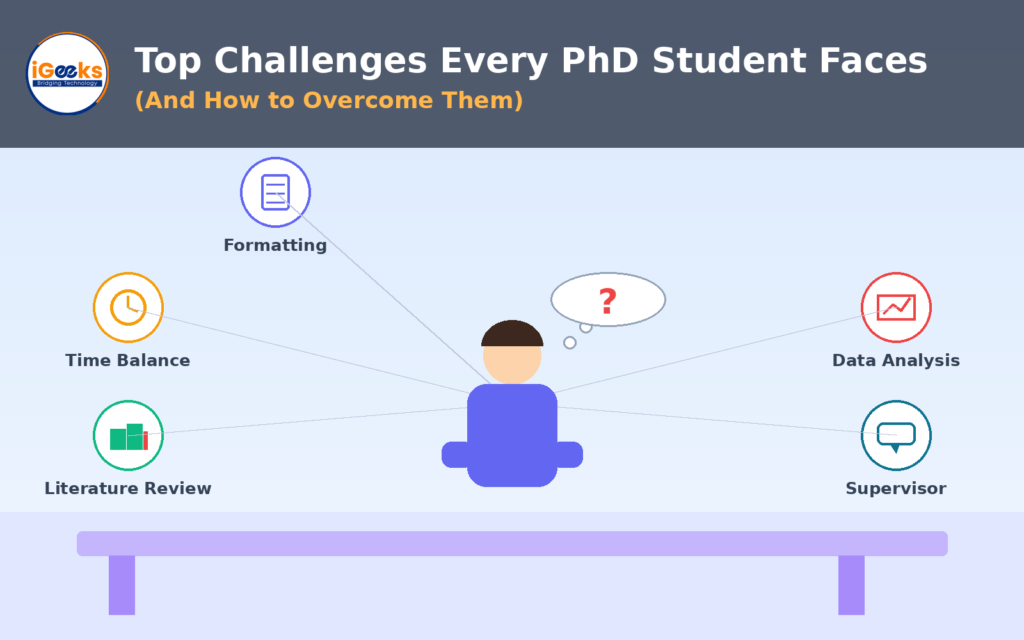
Pursuing a PhD is one of the most intellectually rewarding journeys a person can take on — and also one of the most demanding. Beyond the research itself, scholars quietly navigate a long list of challenges that rarely get talked about openly. If you’re in the middle of your PhD and feeling overwhelmed, know this: what you’re experiencing is common, not a sign that you’re doing something wrong.
Here are the challenges PhD students face most often — and practical ways to work through them.
1. The Isolation of Independent Research
Unlike coursework, a PhD is largely self-directed. Many scholars go from structured classrooms to working alone for months, which can feel isolating — especially during the literature review and analysis phases.
What helps:
- Join or form a peer study group, even informally
- Schedule regular check-ins with your supervisor, not just when problems arise
- Connect with other scholars in your field through conferences or online research communities
2. Imposter Syndrome
It’s incredibly common for PhD scholars to feel like they don’t belong, especially when comparing themselves to published researchers or high-achieving peers. This feeling doesn’t reflect your actual ability — it’s a near-universal experience at the doctoral level.
What helps:
- Remind yourself that your supervisor and committee selected you for a reason
- Track small wins — a completed chapter, a clean dataset, a successful pilot study
- Talk to seniors who’ve been through it; almost everyone has felt the same way
3. Choosing and Narrowing a Research Topic
Many scholars either pick a topic too broad to manage or one so narrow it limits meaningful contribution. Getting this right early saves months of rework later.
What helps:
- Start broad, then narrow based on what’s been under-researched in recent literature
- Discuss potential topics with your supervisor before committing
- Make sure the topic is feasible within your timeline, data access, and resources
4. Getting Lost in the Literature Review
It’s easy to spend far too long reading without converting that reading into writing. Scholars often describe this as feeling like they’re “still not ready” to start writing, even after months of research.
What helps:
- Set a reading limit per week, then force yourself to summarize and write
- Organize sources by theme, not just by author or publication date
- Remember: the literature review doesn’t need to cover everything — it needs to build your argument
5. Data Analysis Overwhelm
Whether it’s SPSS, R, Python, NVivo, or AMOS, statistical or qualitative analysis is one of the most common points where scholars get stuck — not due to lack of effort, but because it requires a skill set most research training doesn’t fully cover.
What helps:
- Learn just enough of the tool to run and interpret your specific tests — you don’t need to master the whole software
- Get a second opinion on your analysis before finalizing results
- If timelines are tight, professional analysis support can save weeks of trial and error
6. Balancing Research With Work, Family, or Teaching
Many PhD scholars, especially part-time or working professionals, juggle their research alongside full-time jobs or family responsibilities. Time, not motivation, becomes the real constraint.
What helps:
- Block dedicated research time in your calendar like a non-negotiable appointment
- Break large tasks (like “write Chapter 3”) into smaller, specific goals (“outline Chapter 3 subsections”)
- Be realistic about your timeline rather than comparing it to full-time scholars
7. Managing the Supervisor Relationship
Supervisor dynamics can significantly affect a scholar’s experience — some students get too little feedback, others feel overly directed. Either extreme is frustrating.
What helps:
- Set clear expectations early about communication frequency and feedback turnaround
- Come to meetings with specific questions rather than open-ended updates
- If a relationship becomes consistently difficult, most universities have processes for additional guidance or mediation
8. Publishing Pressure
Most programs now expect at least one or two journal publications before submission — adding another skill (academic publishing) on top of the thesis itself.
What helps:
- Start identifying target journals early, based on scope and impact factor
- Treat thesis chapters and publishable papers as connected, not separate work
- Don’t underestimate revision timelines — peer review takes longer than expected
9. Formatting, Referencing, and Final Submission Stress
After years of research, small formatting inconsistencies or referencing errors can still delay submission. This stage often gets rushed, which increases the chance of avoidable mistakes.
What helps:
- Check your university’s formatting guide early, not just before submission
- Use reference management tools (Zotero, Mendeley, EndNote) from day one
- Do a full formatting pass separately from your final content review
You Don’t Have to Navigate This Alone
Every one of these challenges is common — and every one of them is manageable with the right support at the right time. Whether you’re stuck on your literature review, need help with data analysis, or are heading into your final viva, getting structured guidance can make the difference between months of stress and steady progress.
Explore our PhD Thesis Help services in Bangalore:
👉 www.makefinalyearproject.com/phd-thesis-help-bangalore.aspx
Have a question? Reach out directly on WhatsApp:
📲 +91 70192 80372
Your research matters. Let’s help you get it across the finish line.