
Completing a medical thesis or dissertation is an important academic milestone for postgraduate medical students. Whether you are pursuing DNB, DrNB, MD, MS, MDS, DM, MCh, Nursing, Physiotherapy, Pharmacy, or other health science programmes, proper research planning, documentation, formatting, ethical compliance and timely submission are essential.
For DNB and DrNB trainees, the National Board of Examinations in Medical Sciences (NBEMS) maintains a Digital Thesis Processing Portal and publishes official notices and guidelines related to thesis protocol and submission. The NBEMS portal currently includes a 2 July 2026 notice concerning timelines for thesis submission, thesis acceptance, eligibility and the maximum permissible duration for successfully qualifying the DNB/DrNB course.
For students under Rajiv Gandhi University of Health Sciences (RGUHS), dissertation and thesis procedures can vary depending on the programme and examination cycle. RGUHS publishes course-specific notifications and curriculum-related guidelines, so students should always verify the latest notification applicable to their course before final submission.
This guide explains the general DNB thesis and RGUHS dissertation process, essential documentation, formatting requirements and a practical pre-submission checklist.
What Is DNB Thesis Submission?
DNB and DrNB trainees are required to complete research work as part of their academic training. According to the NBEMS thesis guidelines, thesis writing is an essential academic requirement for DNB/DrNB trainees toward fulfilment of eligibility for the award of the respective qualification. Thesis applications are submitted through the official NBEMS online system, and candidates are responsible for ensuring that the information submitted is correct.
The official NBEMS Digital Thesis Processing Portal provides access to:
- Thesis protocol submission
- Protocol verification
- Thesis submission guidelines
- Fresh thesis-related documentation
- Modified thesis guidelines
- Declaration and undertaking formats
- Publication-related annexures
- Official notices and timelines
The current NBEMS portal and archive continue to provide official thesis guidelines and related documents for trainees.
DNB Thesis Process: Step-by-Step Guide
1. Select a Relevant Research Topic
Your thesis topic should be:
- Relevant to your medical speciality
- Clinically or academically significant
- Feasible within the available study period
- Supported by adequate patient or sample availability
- Suitable for ethical approval
- Scientifically researchable
A poorly selected topic can create difficulties during data collection, statistical analysis and thesis writing. Therefore, topic selection should be discussed carefully with your guide and department.
2. Prepare the Thesis Protocol
The research protocol is the foundation of the entire study. It generally defines:
- Title of the study
- Background and rationale
- Research question
- Aim and objectives
- Review of relevant literature
- Study design
- Study population
- Inclusion and exclusion criteria
- Sample size
- Data collection methodology
- Statistical analysis plan
- Ethical considerations
- References
DNB/DrNB trainees should use the latest official NBEMS requirements and applicable timelines while preparing and submitting the protocol.
3. Obtain Required Approvals
Before beginning research or collecting data, students may need approvals and permissions applicable to their institution and study design.
Depending on the research, documentation may include:
- Guide approval
- Departmental approval
- Institutional Ethics Committee approval
- Patient information sheet
- Informed consent form
- Case record form or questionnaire
- Institutional permissions
All research involving human participants should follow the applicable ethical and institutional requirements.
4. Conduct the Research and Collect Data
Once the protocol and necessary approvals are in place, the research work can proceed according to the approved methodology.
Maintain proper records of:
- Patient recruitment
- Sample selection
- Investigations
- Clinical observations
- Follow-up
- Data collection
- Exclusions
- Adverse events, where applicable
The collected data should remain consistent with the approved research protocol.
5. Perform Statistical Analysis
Statistical analysis is a critical part of a medical thesis.
The analysis may involve:
- Descriptive statistics
- Mean and standard deviation
- Median and interquartile range
- Chi-square test
- t-test
- ANOVA
- Correlation analysis
- Regression analysis
- Survival analysis
- Diagnostic accuracy analysis
The choice of statistical method should depend on the research question, study design and type of data.
DNB Thesis Writing Format
Although candidates should always follow the latest official NBEMS instructions, a medical thesis commonly contains the following sections:
Preliminary Pages
- Title Page
- Certificate
- Declaration
- Guide certification, where applicable
- Acknowledgement
- Abstract
- Table of Contents
- List of Tables
- List of Figures
- Abbreviations
Chapter 1: Introduction
The introduction explains the background of the research problem and the importance of the study.
Chapter 2: Aim and Objectives
Clearly state the overall aim and specific objectives of the research.
Chapter 3: Review of Literature
Summarise and critically discuss relevant published studies.
Chapter 4: Materials and Methods
This section generally explains:
- Study design
- Study setting
- Study duration
- Sample size
- Selection criteria
- Data collection
- Study variables
- Statistical methods
- Ethical considerations
Chapter 5: Results
Present the findings using:
- Tables
- Graphs
- Charts
- Statistical results
Results should be clear, accurate and directly related to the study objectives.
Chapter 6: Discussion
Interpret your findings and compare them with previous research.
Chapter 7: Conclusion
Present the major conclusions of the study based on the research findings.
References
Use the reference style specified by the applicable university or examination authority.
Annexures
Depending on the study, annexures may include:
- Ethics approval
- Consent forms
- Questionnaires
- Case record forms
- Data collection sheets
- Additional tables
DNB Thesis Submission 2026: Important Points
Before final submission, candidates should carefully verify:
✓ Latest NBEMS notice and applicable timeline
✓ Correct thesis title
✓ Protocol consistency
✓ Required approvals
✓ Complete research data
✓ Statistical analysis
✓ Proper tables and figures
✓ Accurate references
✓ Required declarations and certificates
✓ Correct online submission details
✓ Final PDF formatting
The NBEMS portal specifically advises candidates to carefully review the applicable guidelines before submission and ensure that information entered in the online application is correct and factual.
RGUHS Thesis Submission Guide 2026
RGUHS students must follow the latest university notifications applicable to their specific course and examination cycle. The university publishes examination and curriculum notifications covering different programmes, and dissertation submission schedules may differ across disciplines.
A typical postgraduate dissertation workflow includes:
- Topic selection
- Synopsis preparation
- Required institutional and ethical approvals
- Research and data collection
- Statistical analysis
- Dissertation writing
- Formatting and documentation
- Guide and departmental verification
- Submission according to the applicable RGUHS notification
- Viva or examination requirements, where applicable
RGUHS Thesis and Dissertation Format
A postgraduate medical or health science dissertation generally includes:
Preliminary Section
- Title Page
- Certificate
- Declaration
- Acknowledgement
- Abstract
- Contents
Main Chapters
Introduction – Background and significance of the research.
Review of Literature – Previous research related to the topic.
Aim and Objectives – Clearly defined research goals.
Materials and Methods – Study methodology and research design.
Results – Statistical findings and observations.
Discussion – Interpretation and comparison with previous studies.
Conclusion – Key findings and implications.
References – References prepared according to the prescribed style.
Annexures – Consent forms, ethics approval, questionnaires and other supporting documents.
RGUHS Thesis Submission 2026 Checklist
Before submitting your dissertation, check the following:
Research Documentation
- Approved synopsis
- Ethics approval, where applicable
- Consent documentation
- Complete data records
Academic Documentation
- Guide approval
- Co-guide approval, where applicable
- HOD or departmental approval, if required
- Required certificates and declarations
Thesis Quality
- Proper grammar and academic writing
- Consistent formatting
- Correct table and figure numbering
- Accurate citations
- Complete reference list
- Statistical accuracy
Final Submission
- Verify the latest RGUHS notification
- Check the applicable submission date
- Follow the prescribed submission method
- Verify file format and document requirements
- Keep acknowledgement and submission records
RGUHS currently publishes examination and course-specific notifications, including dissertation-related notices for different programmes. Students should therefore avoid relying on old deadlines or generic online information and confirm the notification applicable to their exact course and examination cycle.
Common Mistakes That Can Delay Thesis Submission
Many students complete their research but face problems during final submission because of avoidable mistakes.
Common issues include:
- Incorrect formatting
- Missing certificates
- Incomplete ethics documentation
- Mismatch between protocol and final study
- Incorrect statistical analysis
- Poor table formatting
- Reference errors
- Missing citations
- Incorrect online information
- Last-minute submission
- Failure to check the latest official notification
The best approach is to prepare a detailed pre-submission checklist well in advance.
How to Make Your Medical Thesis Submission Easier
A structured timeline can reduce last-minute stress.
3–6 Months Before Submission
- Complete data collection
- Clean and verify the dataset
- Start statistical analysis
- Complete the literature review
1–3 Months Before Submission
- Prepare the complete thesis draft
- Review results and discussion
- Check references
- Verify formatting requirements
- Discuss corrections with the guide
Final Weeks
- Complete required corrections
- Verify certificates and annexures
- Perform final proofreading
- Check tables and figures
- Verify plagiarism requirements, if applicable
- Confirm the latest submission notification
- Submit through the prescribed process
DNB vs RGUHS Thesis Submission: Key Difference
| DNB/DrNB | RGUHS |
|---|---|
| Governed by NBEMS requirements | Governed by RGUHS and course-specific regulations |
| Uses the NBEMS Digital Thesis Processing Portal | Submission procedures depend on the programme and applicable university notification |
| Candidates must follow NBEMS thesis guidelines and notices | Students must verify RGUHS course and examination-specific requirements |
| Protocol and thesis processes follow NBEMS documentation | Synopsis, dissertation and submission procedures may vary by discipline |
Students should always rely on the latest official authority notification for final deadlines and submission requirements.
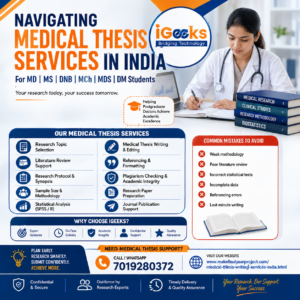
Medical Thesis Writing and Research Support
Completing a DNB, MD, MS, MDS, DM, MCh or other medical thesis requires a combination of clinical knowledge, research methodology, scientific writing, statistical analysis and proper documentation.
Professional academic and research guidance can help students with:
- Thesis topic selection
- Research methodology guidance
- Synopsis preparation support
- Literature review
- Statistical analysis
- SPSS analysis
- Data interpretation
- Thesis writing assistance
- Dissertation formatting
- Reference management
- Plagiarism review support
- Journal paper preparation
- Viva preparation
For customised medical thesis and dissertation support, visit:
Medical Thesis Writing Services:
https://www.makefinalyearproject.com/medical-thesis-writing-services-india.html
WhatsApp: 7019280372
Frequently Asked Questions
1. Is a thesis mandatory for DNB?
NBEMS identifies thesis writing as an essential academic requirement for DNB/DrNB trainees toward fulfilment of eligibility for the respective qualification, subject to the applicable regulations and current official requirements.
2. Where can I check DNB thesis submission updates?
Candidates should check the official NBEMS Digital Thesis Processing Portal and the latest notices published by NBEMS. The portal currently lists a 2 July 2026 notice related to thesis submission timelines, acceptance and course qualification requirements.
3. What is required for RGUHS thesis submission?
Requirements depend on the specific programme and examination cycle. Students should verify the latest RGUHS notification applicable to their course before submission.
4. Can old thesis submission deadlines be used?
No. Submission schedules and procedures may change. Always verify the latest official NBEMS or RGUHS notification before submitting.
5. What should be checked before final submission?
Verify the thesis format, approvals, certificates, references, statistical analysis, annexures, online details and the latest official submission instructions.
Conclusion
DNB Thesis Submission 2026 and RGUHS Thesis Submission 2026 require careful planning, scientific research, ethical compliance, accurate statistical analysis and proper documentation. The most important step is to follow the latest official instructions issued by NBEMS or RGUHS for your specific programme and examination cycle.
Do not wait until the final submission deadline. Start early, maintain proper research documentation, complete your statistical analysis on time and keep your guide involved throughout the thesis process.
For support with medical thesis writing, synopsis preparation, research methodology, statistical analysis, SPSS, dissertation formatting and journal paper preparation, visit:
https://www.makefinalyearproject.com/medical-thesis-writing-services-india.html
WhatsApp: 7019280372
Disclaimer: This article provides general academic guidance. DNB/DrNB candidates should verify the latest requirements through the official NBEMS thesis portal and notices, while RGUHS students should follow the latest course-specific RGUHS notifications. Official rules, deadlines and submission procedures may change.